Understanding the Sydney Rental Market in 2026
When it comes to relocation appeal, few cities rival Sydney.
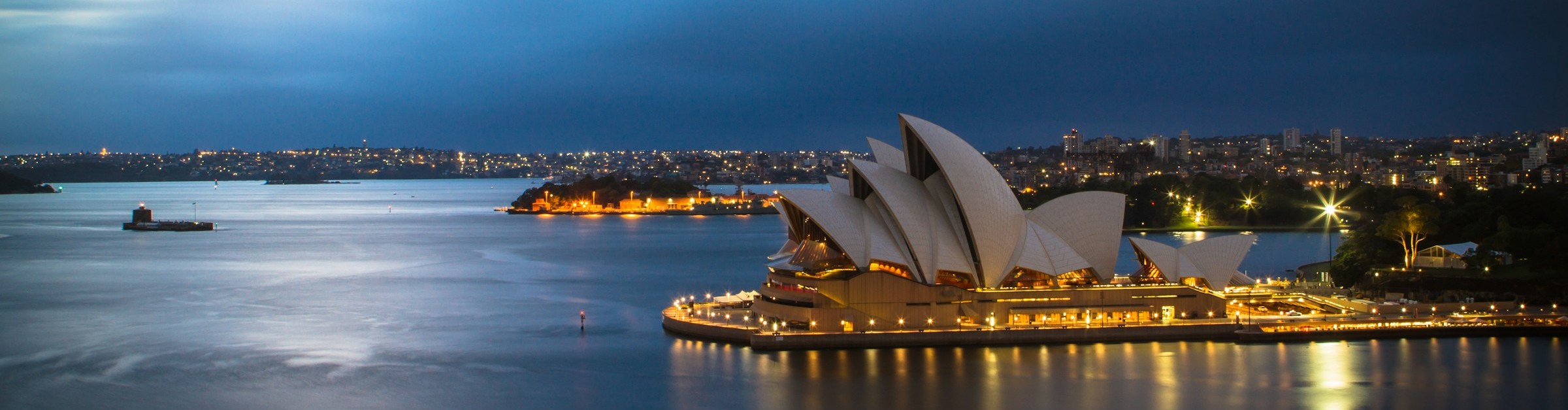
The climate, the food scene and the outdoor culture are genuine draws. But Sydney is also vast, geographically complex and home to the most expensive rental market in Australia. Despite a moderation in rent growth over the past twelve months, the underlying conditions that drove the squeeze have not changed.
Vacancy across the city sits at around 1.5% and properties in popular areas attract multiple applications within 24 hours of listing. Rents for houses average AUD 780 per week – roughly 34% above Melbourne, Sydney's nearest domestic rival. A two-bedroom apartment in the Eastern Suburbs costs between AUD 1,000 and 1,500 per week.
Why supply isn't catching up
Sydney’s population grows by more than 100,000 residents a year. New housing completions are not keeping pace – planning approvals are slow, construction costs are high and labour is constrained. The NSW government reported an 8% increase in dwelling approvals for Greater Sydney in the 2025 financial year, but that is not enough to close a gap that has been widening since 2020.
The more immediate problem is where new stock is being built. Most new apartment completions are in outer Western Sydney. The inner and middle-ring suburbs – where the majority of those relocating want to live – are seeing very little new supply come to market.
As house rents have pushed beyond many budgets, demand has concentrated in apartments. Vacancy for units is now lower than for houses across most of inner Sydney.
What this means for suburb selection
Greater Sydney covers an area larger than Los Angeles County, with 650+ suburbs spread across a city where a 15-kilometre drive at peak hour can take 45 minutes – and where someone lives has a direct effect on commute times, school options and daily routines.
In a market where central locations remain highly competitive, many renters are widening their search to areas that offer more availability and better value. Parramatta is one example. Rents here run 30–40% below the Eastern Suburbs – a two-bedroom apartment averages around AUD 680 per week compared to AUD 1,000–1,500 in the east. What justifies the move is what the area offers: NAB, Westpac and Deloitte are based at Parramatta Square, and the Westmead Health and Medical Research Precinct employs over 20,000 people. Sydney Metro West, currently under construction, will eventually connect Parramatta directly to the city centre, though completion is not expected until the early 2030s.
The Inner West – Balmain, Newtown, Marrickville, Leichhardt – offers another alternative for those priced out of the Eastern Suburbs or North Shore. More affordable, well connected by existing metro and train links, and with a strong local character that suits professionals and families alike.
Choosing the right suburb in Sydney is often more important than securing the property itself. Our downloadable Sydney guide compares commute patterns, schooling access and rental realities across the city’s key relocation areas.
What has changed legislatively
Three changes from 2024–25 are worth knowing:
- Rent increases are now capped at once per 12 months under legislation in force from October 2024.
- No-grounds evictions were abolished in NSW in May 2025 – landlords need a legally specified reason to end a tenancy, giving assignees stronger tenure security than before.
- Pet reform also came into effect in May 2025, meaning landlords can no longer refuse a pet without a valid legal reason.
Sydney in the APAC context
Sydney is expensive, but not uniquely so by regional standards. Singapore and Hong Kong remain higher for equivalent housing, while Tokyo and Melbourne generally sit below. What makes Sydney stand out is not simply cost, but how limited supply intersects with geography.
In many global cities, paying more usually expands options. In Sydney, budget does not always solve availability, commute practicality or school access. Securing the right suburb often matters as much as securing the property itself.
👉🏼 For a practical snapshot of some of Sydney's most popular neighbourhoods for new arrivals, the rental process and local essentials, download our guide below.
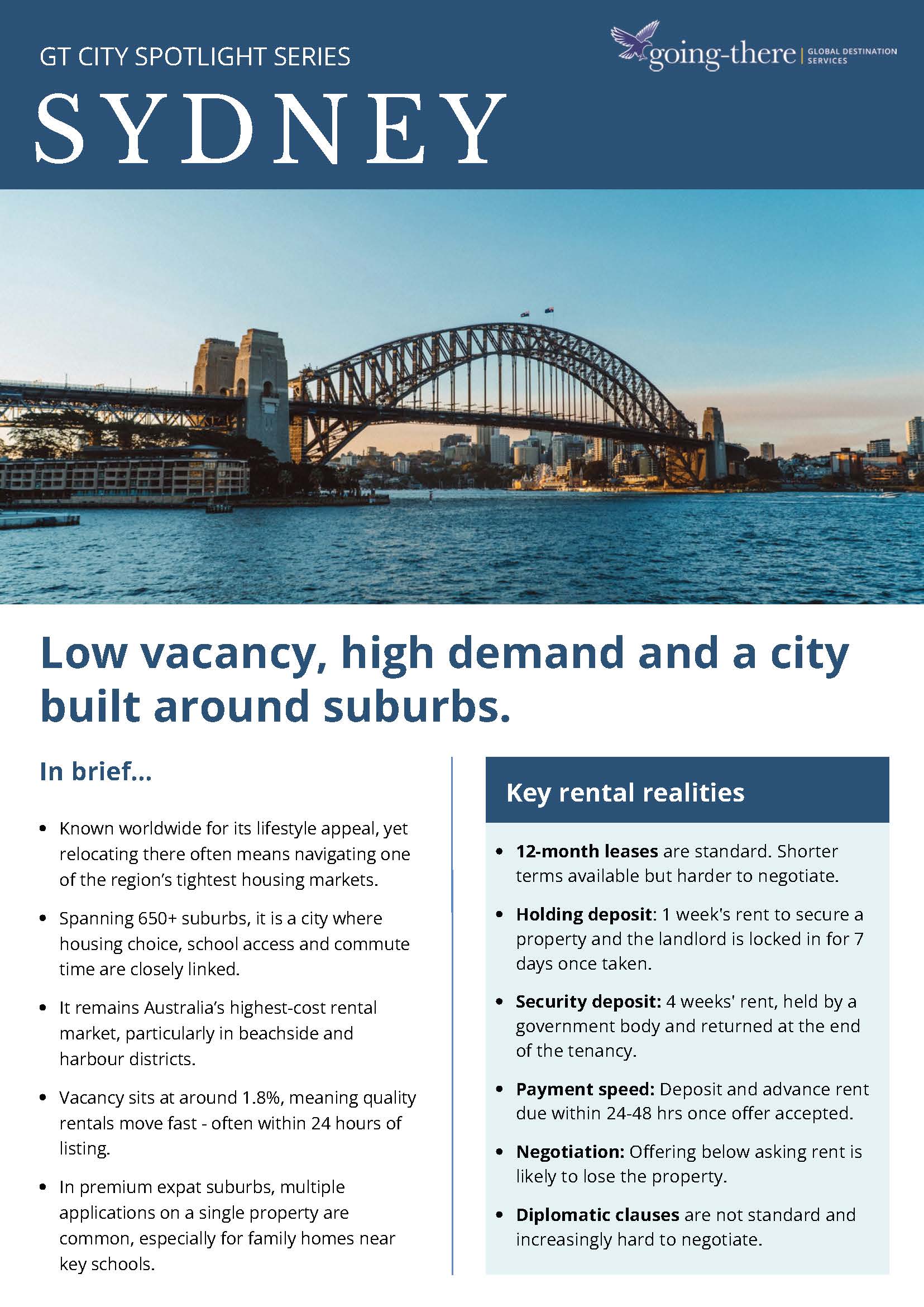

Used on its own or in addition to an in-person orientation, our in-depth, interactive city guides offer detailed information on all of the areas covered by our programmes.
Click here for a list of all GT locations »
Used on its own or in addition to an in-person
orientation. Our in-depth, interactive city guides
offer detailed information on all of the areas
covered by our tours.
Click here for a list of all GT locations »